
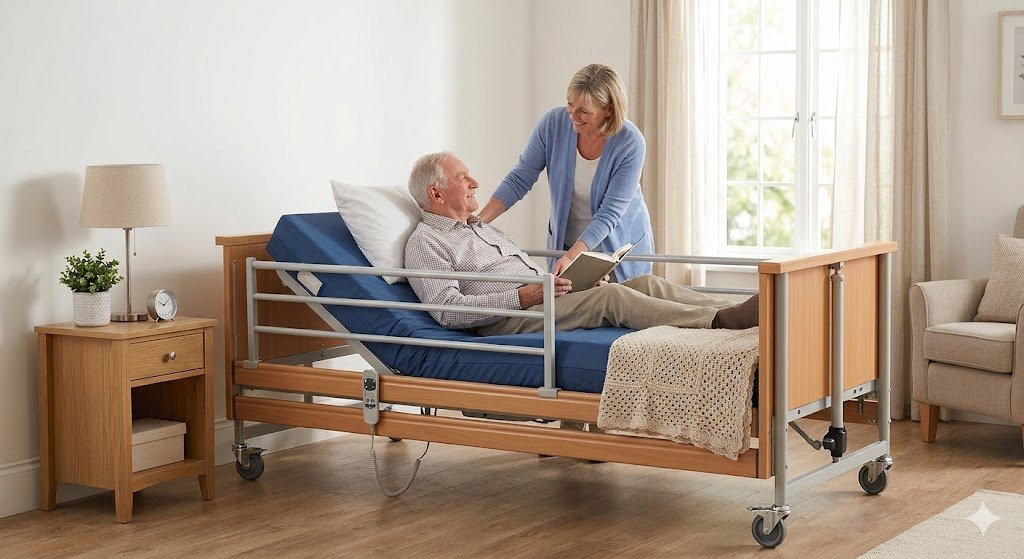
Whether you're setting up care at home for a loved one or equipping a facility, choosing the right hospital bed is a decision that directly affects comfort, safety, and recovery. The options range from basic manual frames to fully electric beds with advanced positioning , and the difference matters more than most people expect.
This guide walks you through everything to consider before buying.
Start With the Patient's Needs
Before looking at features or prices, answer these questions first. They determine which category of bed is appropriate and prevent you from over- or under-specifying.
- How mobile is the patient? Can they adjust their own position, or does a caregiver handle everything?
- What medical conditions are involved? Conditions like pressure sores, respiratory issues, post-surgical recovery, or neurological impairment each have specific bed requirements.
- How long will the bed be needed? Short-term recovery has different priorities to long-term or palliative care.
- Who is the primary caregiver? A professional nurse has different needs to a family member with no clinical training.
- What is the patient's weight? This determines whether a standard or bariatric frame is required.
Manual vs. Electric: The First Decision
| Manual | Semi-Electric | Fully Electric | |
|---|---|---|---|
| How it works | Crank-operated adjustments | Motor for head/foot; manual height | All adjustments motorised |
| Best for | Short-term recovery, tight budgets | Home care with occasional repositioning | Long-term care, limited mobility, frequent adjustments |
| Caregiver effort | High , all adjustments physical | Moderate | Low , controls do the work |
| Noise | Silent | Some motor noise | Quiet motors available; worth checking |
| Cost | Lowest | Mid-range | Highest |
For long-term home care, a fully electric bed is almost always the better investment. The daily ease of use for both patient and caregiver justifies the cost over time.
Key Features to Evaluate
Height Adjustment (Hi-Lo)
This is one of the most important safety features in any care setting. A bed that raises and lowers lets caregivers work at a comfortable height , reducing back strain significantly , and allows the bed to be lowered close to the floor for patients at risk of falling. If you can only prioritise one feature, make it this one.
Positioning Capabilities
Beyond basic head and foot adjustment, higher-spec beds offer:
- Trendelenburg , tilts the whole bed so feet are higher than head; used for circulation and some clinical procedures
- Reverse Trendelenburg , head higher than feet; useful for respiratory conditions
- Zero gravity / cardiac chair position , distributes weight evenly to reduce pressure; good for extended bed rest
- Knee break , raises the knee section to prevent the patient sliding down when the head is elevated
Not every patient needs all of these. But for complex or long-term care, having them available matters.
Side Rails
Side rails prevent falls and give patients something to grip when repositioning. A few things to keep in mind:
- Half rails are generally safer than full-length rails , full rails running the entire length of the bed create entrapment risks in the gap between rail and mattress
- Adjustable or foldable rails make transferring in and out easier
- Check that the rail mechanism is simple enough for the patient or caregiver to operate independently
Mattress Compatibility
The bed frame and mattress need to work together. Key considerations:
- Pressure relief , for patients spending extended time in bed, a foam, gel, or alternating air mattress significantly reduces the risk of pressure sores
- Fit , the mattress must fit the frame without gaps at the sides or ends, which create entrapment and injury risks
- Hygiene , look for a waterproof or easily wipeable cover, particularly for home care settings
Weight Capacity
Standard hospital beds typically support up to around 180–200 kg. If the patient exceeds this, a bariatric bed with a reinforced frame and wider sleeping surface is necessary. Never use a bed rated below the patient's weight , frame failure is a serious safety risk.
Castors and Mobility
Lockable castors allow the bed to be moved for cleaning or repositioning within a room, then secured firmly during use. For home settings, check that the castors won't damage your flooring.
For a more detailed breakdown of bed specifications , including frame materials, motor types, and surface options , see our guide on hospital and medical bed features and specifications.
Room and Space Considerations
A hospital bed takes up more space than a standard domestic bed , and needs clearance on both sides for caregiver access and equipment. Before buying:
- Measure the room and map out where the bed will sit
- Allow at least 90 cm on each long side for caregiver movement
- Check that doorways are wide enough for delivery and positioning
- Consider where additional equipment (drip stands, oxygen, commodes) will fit
If space is genuinely limited, some beds offer a narrower footprint , but don't compromise on caregiver access, as this affects both care quality and safety.
Home Use vs. Facility Use
The priorities differ depending on the setting.
Home care , Prioritise quiet motors (nighttime adjustments shouldn't disturb sleep), a lower profile that fits into a bedroom environment, ease of use for non-clinical family caregivers, and a bed that can be lowered close to the floor for safety.
Care facilities , Durability and warranty matter more. Beds in facilities are used continuously and need frames built for high daily use. Staff ergonomics , particularly Hi-Lo range , are critical for reducing injury rates among caregivers.
Hospital Bed Price Ranges in South Africa
Hospital bed prices vary significantly by type and specification. As with most medical equipment, import costs and exchange rates affect pricing , treat these as approximate guides and always get a current quote.
| Bed Type | Approximate Price Range | Notes |
|---|---|---|
| Basic Manual (fixed height) | R3,000 – R8,000 | Limited adjustability; short-term or budget use |
| Manual Hi-Lo | R7,000 – R18,000 | Crank-operated height; good for basic home care |
| Semi-Electric | R15,000 – R35,000 | Motor for head/foot positioning; manual height |
| Fully Electric | R30,000 – R80,000 | All adjustments motorised; best for long-term care |
| Bariatric / Heavy-Duty | R40,000 – R120,000+ | Reinforced frames; wider sleeping surface |
| ICU / Complex Care | R80,000 – R250,000+ | Advanced positioning; monitoring integration |
Used hospital beds can bring quality, well-maintained frames into reach at significantly lower cost. Browse hospital beds listed on Meditree to see what's currently available.
A Quick Comparison: Bed Types at a Glance
| Bed Type | Best For | Caregiver Effort | Typical Setting |
|---|---|---|---|
| Basic Manual | Short-term recovery | High | Home / temporary |
| Manual Hi-Lo | General home care | Moderate-high | Home |
| Semi-Electric | Regular repositioning needs | Moderate | Home / step-down care |
| Fully Electric | Long-term or palliative care | Low | Home / care facility |
| Bariatric | Higher weight patients | Low-moderate | Home / facility |
| ICU / Complex | Critical or complex conditions | Very low | Facility / specialist home care |
Summary: Questions to Answer Before You Buy
- What is the patient's level of mobility and independence?
- Are there specific medical conditions that require particular positioning features?
- What is the patient's weight, and does the bed's capacity exceed it?
- Will a caregiver be operating the bed , and how experienced are they?
- Is this for short-term recovery or long-term care?
- Does the room have sufficient space and access?
- What mattress is needed, and does it fit the frame correctly?
- Is a Hi-Lo height range required for caregiver safety?
Getting these right before purchasing , ideally with input from a healthcare professional , will save significant cost and frustration down the line.
Also setting up home mobility equipment? See our guide on how to choose the right wheelchair for a similar breakdown on manual and power wheelchair options.